Silent Erosion: How Currency Volatility Quietly Undermines Asia-Pacific Utility Returns for U.S. Investors
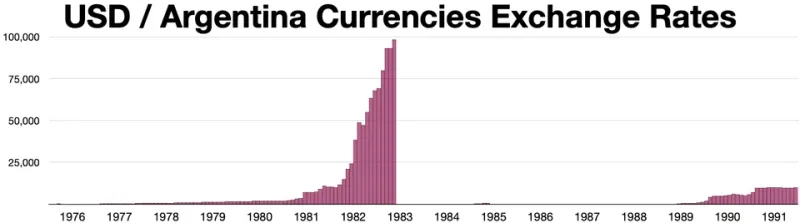
Photo: Wikideas1, CC0, via Wikimedia Commons
There is a particular kind of investment disappointment that arrives not with dramatic headlines but in the quiet arithmetic of currency conversion. A utility asset in Southeast Asia or South Asia may deliver robust local-currency dividends, maintain stable regulatory relationships, and outperform domestic peers on virtually every operational metric — yet still produce underwhelming returns once those earnings are translated back into U.S. dollars. For American institutional investors, this gap between local performance and dollar-adjusted reality represents one of the most persistently underappreciated risks in the Asia-Pacific utility sector.
At HK Pacific Utility Consulting, we observe this pattern repeatedly. Portfolio managers who have dedicated significant analytical resources to understanding tariff structures, capital expenditure cycles, and earnings quality in markets ranging from the Philippines to Indonesia often arrive at the currency question almost as an afterthought. The result, in many cases, is a return profile that looks materially different from what pre-investment models projected.
The Yield Spread Illusion
The appeal of Asia-Pacific utilities to U.S. income-oriented investors is straightforward: dividend yields in several regional markets consistently exceed what comparable domestic infrastructure assets offer, sometimes by margins of 200 to 400 basis points. In an environment where U.S. pension funds and insurance companies are under persistent pressure to meet actuarial return targets, that spread is genuinely compelling.
The problem is that yield spread analysis, in its most common form, operates in local-currency terms. An investor who identifies a Philippine distribution utility yielding 6.8% in peso terms and compares that favorably against a U.S. regulated utility yielding 3.9% has performed a comparison that is, at best, incomplete. The peso has experienced periods of significant depreciation against the dollar — most notably during episodes of domestic inflation, U.S. Federal Reserve tightening cycles, and regional risk-off sentiment. During such periods, a nominally superior yield can be partially or entirely consumed by exchange rate movement.
This is not a theoretical concern. Historical data on dollar-adjusted total returns for Asia-Pacific utility indices illustrates that currency effects have, in several five-year rolling periods, accounted for return differentials of 150 to 300 basis points relative to local-currency calculations. In extreme cases — the Indonesian rupiah in 2018, the Sri Lankan rupee in 2022 — the divergence has been considerably more severe.
Why Emerging Market Utility Currencies Carry Distinct Risks
Not all currency risk in the Asia-Pacific region is equivalent. Investors who approach the region as a monolithic FX exposure are making a category error. The Hong Kong dollar's peg to the U.S. dollar eliminates direct exchange rate risk for HKD-denominated assets, though it introduces its own set of monetary policy constraints. The Australian and New Zealand dollars, while subject to commodity-cycle volatility, trade in deep, liquid markets with well-established hedging infrastructure.
The more complex exposures lie in Southeast Asian and South Asian currencies, where several structural factors amplify volatility. Many utilities in these markets operate under tariff frameworks that are denominated or benchmarked in local currency, while their capital expenditure programs — particularly for renewable energy infrastructure — involve significant dollar or euro-denominated equipment imports. This creates a natural mismatch: revenue streams in local currency, cost structures with meaningful foreign currency components. When local currencies weaken, utility operators face margin compression that can impair dividend sustainability, compounding the direct FX translation loss that dollar-based investors already absorb.
Furthermore, central banks in several Asia-Pacific emerging markets have demonstrated willingness to maintain artificially stable exchange rates during periods of domestic political sensitivity, only to allow sharp corrections when reserve pressures become untenable. These discontinuous adjustments are particularly damaging to return calculations because they concentrate losses into short windows that are difficult to hedge efficiently.
The Real Cost of Currency Hedging
The standard institutional response to currency risk is hedging, and for developed-market Asia-Pacific currencies, this is a reasonable and accessible tool. Forward contracts and cross-currency swaps for Australian dollar, Japanese yen, and Singapore dollar exposures are liquid, competitively priced, and operationally straightforward for most U.S. institutional platforms.
For emerging market currencies, the calculus is considerably less favorable. Hedging costs for Indonesian rupiah, Philippine peso, or Indian rupee exposures reflect the interest rate differentials between those markets and the United States — and in environments where regional central banks maintain elevated policy rates to defend their currencies, those differentials can be substantial. A U.S. investor hedging a peso-denominated utility position may incur annual hedging costs of 3% to 5% or more, depending on the tenor of the hedge and prevailing rate differentials. At that cost, the yield advantage that motivated the investment in the first place is significantly diminished or eliminated entirely.
This creates a genuine dilemma. An unhedged position retains full exposure to the currency volatility that has historically impaired returns. A fully hedged position may preserve dollar return predictability but at a cost that undermines the investment thesis. Many institutional investors resolve this tension by accepting partial hedges — typically covering 40% to 60% of notional exposure — but this approach requires a deliberate view on currency direction that most utility-focused investment teams are not structured to form with rigor.
A Framework for Quantifying True FX Exposure
Moving beyond simple correlation analysis requires treating currency risk as a distinct return component rather than a residual. We recommend a three-layer assessment framework for U.S. investors evaluating Asia-Pacific utility positions.
The first layer involves decomposing historical total returns into their local-currency and FX components across multiple time horizons — one year, three years, and five years at minimum. This decomposition should be conducted across different phases of the U.S. dollar cycle, since Asia-Pacific currency performance against the dollar is meaningfully correlated with dollar strength, Fed policy trajectory, and global risk appetite.
The second layer examines the operational currency exposure of the utility itself. As noted above, utilities with dollar-linked capital costs but local-currency revenues carry embedded FX risk that flows through to dividend sustainability. Investors should request or model the currency composition of each target company's cost structure, debt book, and capital program before forming return expectations.
The third layer addresses portfolio-level aggregation. U.S. institutional investors with multiple Asia-Pacific utility positions may hold exposures across several currencies simultaneously. Correlation analysis at this level can reveal natural offsets — for example, between currencies that respond differently to commodity price cycles — or can expose dangerous concentrations, such as overweighting of currencies that tend to depreciate simultaneously during U.S. dollar strengthening episodes.
Recalibrating the Investment Case
None of this analysis is intended to suggest that Asia-Pacific utility investments are unsuitable for U.S. portfolios. The structural case for regional infrastructure exposure — growing energy demand, urbanization-driven water and power investment, improving regulatory frameworks in several markets — remains intact. What changes when currency risk is properly accounted for is the precision of the return expectation and the rigor of the position sizing.
U.S. investors who have consistently underperformed their Asia-Pacific utility allocation benchmarks should, in our experience, examine currency accounting before concluding that asset selection or market timing was at fault. In many cases, the underlying assets performed adequately; the shortfall was introduced at the conversion step.
For investors prepared to engage with this complexity honestly — modeling hedging costs explicitly, stress-testing returns against historical currency scenarios, and building portfolio-level currency discipline — the Asia-Pacific utility sector continues to offer genuine opportunities that domestic infrastructure markets cannot replicate. The prerequisite is treating foreign exchange not as a footnote to the investment thesis, but as a first-order variable in its own right.