Thirst for Returns: What US Institutional Investors Must Understand About Asia-Pacific Water Utility Risk
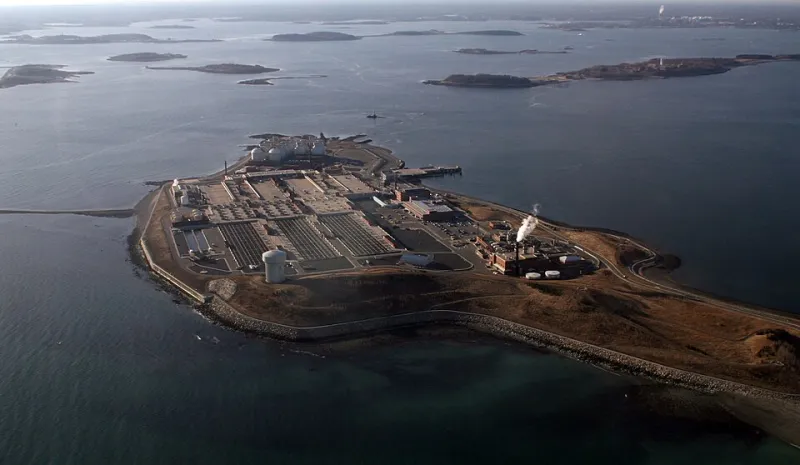
Photo: Doc Searls, CC BY-SA 2.0, via Wikimedia Commons
Water is the utility sector's least glamorous conversation — until it becomes the most urgent one. Across the Asia-Pacific region, a slow-moving crisis is reshaping how utility operators manage their balance sheets, how regulators write tariff structures, and ultimately, how patient capital should be allocated. For US institutional investors who have built ESG frameworks around carbon metrics and energy transition timelines, the water dimension of Asia-Pacific utility exposure represents a material blind spot that carries real financial consequences.
This is not a distant environmental concern. It is an asset valuation issue that is already manifesting in earnings guidance, capital expenditure cycles, and regulatory renegotiations across some of the world's most economically significant markets.
The Infrastructure Gap That Compounds Every Other Risk
Aging water infrastructure is a familiar problem in the United States — the American Society of Civil Engineers has graded the nation's drinking water systems a C-minus for years. But the scale and complexity of the challenge across the Asia-Pacific is of an entirely different order. In many Southeast Asian cities, non-revenue water rates — the percentage of treated water lost to leakage, theft, or metering errors before it ever generates revenue — routinely exceed 30 to 40 percent. For a utility operator, that is not an operational inefficiency; it is a structural drag on return on assets.
In markets like the Philippines, Indonesia, and Vietnam, municipal water concessions are often layered with legacy agreements that cap tariff increases well below the rate of infrastructure investment required to close the gap. This creates a compounding dynamic: operators cannot generate sufficient free cash flow to fund the capital programs that would reduce losses, which in turn depresses the asset quality that underpins valuations. US fund managers evaluating these operators through a standard discounted cash flow lens may be systematically underestimating both the capex burden and the regulatory risk embedded in these concession structures.
Singapore and Australia: Two Models, Two Lessons
Not every market in the region presents the same picture. Singapore has, over several decades, constructed what is arguably the world's most sophisticated water security architecture. Through its Four National Taps strategy — encompassing imported water, local catchment, NEWater (reclaimed wastewater), and desalination — the city-state has effectively engineered scarcity out of its utility risk profile. For US investors, Singapore's listed and quasi-listed water entities offer a relatively clean exposure to long-duration infrastructure with strong regulatory clarity and sovereign-backed demand.
Australia presents a more instructive case study in climate-driven volatility. The prolonged drought cycles that have characterized eastern Australia over the past two decades have forced utilities in New South Wales, Victoria, and Queensland to make substantial investments in desalination capacity — investments that generate significant fixed costs regardless of precipitation levels. When rainfall returns, those assets sit underutilized, creating earnings headwinds that can persist for years. The lesson for US institutional investors is not that Australian water utilities are uninvestable, but rather that climate scenario modeling must be embedded into the valuation framework from the outset, not treated as an ESG footnote.
Regulatory Innovation as Both Opportunity and Uncertainty
One of the more consequential developments across the region is the accelerating pace of regulatory reform in water sector governance. Governments from New Zealand to Japan are rethinking the structures under which water services are delivered, often under pressure from fiscal constraints and climate adaptation mandates. In New Zealand, the Three Waters reform debate — which proposed consolidating hundreds of local water authorities into a small number of large entities — generated years of political turbulence before being substantially revised by a subsequent government.
For US investors, this kind of regulatory churn creates a specific type of risk that does not appear on a standard financial statement: the risk that the regulatory compact underpinning an investment thesis will be materially altered mid-cycle. Private equity firms and infrastructure funds that entered positions based on assumptions about tariff-setting authority or concession renewal timelines have, in some cases, found those assumptions invalidated by political decisions made in Wellington, Canberra, or Manila.
However, regulatory innovation also creates opportunity. Markets that are actively restructuring their water governance frameworks are, by definition, creating new asset configurations — consolidated entities with improved balance sheets, new concession awards, and in some cases, genuine privatization opportunities that would not have existed under the prior structure. Investors who build the analytical capacity to track these regulatory processes in real time are better positioned to act when windows open.
What ESG Frameworks Are Missing
The ESG investment community has made significant progress in incorporating water-related metrics into utility sector analysis. Frameworks from organizations such as the Sustainability Accounting Standards Board and the Task Force on Climate-related Financial Disclosures now provide structured guidance on water risk disclosure. However, the application of these frameworks to Asia-Pacific utility operators remains inconsistent, and the data quality underlying disclosed metrics varies considerably across jurisdictions.
US institutional investors relying on third-party ESG ratings to screen Asia-Pacific water utility exposure should be cautious about the degree to which those ratings capture jurisdiction-specific regulatory risk, infrastructure vintage, or climate scenario sensitivity. A utility in coastal Southeast Asia facing both saltwater intrusion into freshwater aquifers and aging distribution networks may carry materially different risk than its ESG score suggests when benchmarked against a Singaporean or Australian peer.
Building proprietary analytical capacity — or partnering with advisors who have on-the-ground knowledge of specific regulatory environments — is increasingly a competitive differentiator for funds operating in this space.
The Long-Duration Argument
Despite the complexity, the long-term investment case for Asia-Pacific water utility exposure remains compelling for patient capital. Population growth, urbanization, and the escalating impacts of climate change will drive sustained demand for water infrastructure investment across the region for decades. The Asian Development Bank estimates that Asia alone will require trillions of dollars in water and sanitation investment through mid-century — investment that will, in many cases, flow through utility operators and concession structures that are accessible to international institutional capital.
For US fund managers with the analytical sophistication to navigate regulatory heterogeneity, infrastructure risk, and ESG data limitations, the Asia-Pacific water sector offers a return profile that is genuinely differentiated from domestic utility exposure. The key is approaching it with the same rigor that the underlying complexity demands — and resisting the temptation to treat the region as a monolithic investment thesis when it is anything but.