Powering the Machine: Why AI's Electricity Appetite Is Rewriting Utility Valuations Across Asia-Pacific
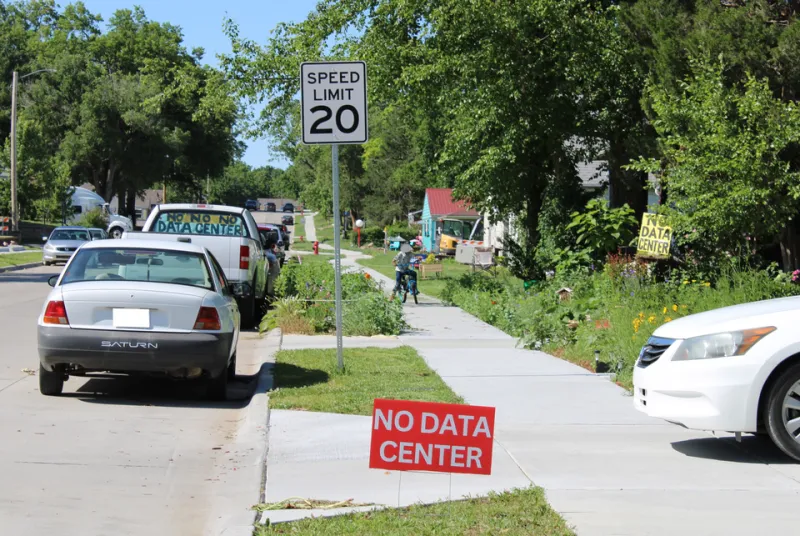
Photo: Catboy69, CC BY 4.0, via Wikimedia Commons
For most of the past decade, Asia-Pacific utility stocks occupied a familiar corner of US institutional portfolios: steady dividend payers, modest growth profiles, and valuations anchored to regulated asset bases and predictable consumption curves. That comfort is now under significant pressure. Across Hong Kong, Singapore, Malaysia, and Thailand, a new class of electricity consumer has arrived — one that draws power at a scale and intensity that legacy grid infrastructure was simply not built to accommodate.
Artificial intelligence, and the data center ecosystems that support it, is reshaping electricity demand in ways that traditional capacity planning frameworks cannot adequately model. The implications for US investors with exposure to Asia-Pacific utilities are substantial, and the market has been slow to price them in.
A Demand Curve Unlike Any Before It
Conventional utility load forecasting in Asia-Pacific, as in most mature markets, has historically been grounded in population growth, industrial output, and incremental commercial expansion. These variables move gradually, giving utilities and their regulators time to plan generation additions, transmission upgrades, and distribution reinforcements years in advance.
AI data centers operate on an entirely different logic. A single hyperscale facility serving large language model inference workloads can consume anywhere from 20 to 100 megawatts of continuous power — equivalent to the electricity demand of tens of thousands of residential households. Unlike conventional commercial tenants, these facilities run at near-maximum load around the clock, with minimal seasonal variation. When a major technology company announces a regional AI infrastructure expansion in Singapore or a colocation operator commissions a new campus outside Hong Kong, the demand signal is immediate, concentrated, and persistent.
Singapore's government temporarily halted new data center construction in 2019 precisely because the grid could not absorb unconstrained growth. The moratorium was eventually lifted with new efficiency standards attached, but the episode illustrated a fundamental tension: digital infrastructure investment timelines move at venture capital speed, while utility grid upgrades move at regulatory and engineering speed. That mismatch has not been resolved. It has intensified.
The Infrastructure Gap US Investors Are Underweighting
For US institutional investors accustomed to evaluating domestic utilities, the Asia-Pacific context introduces several complicating layers that are easy to overlook from a distance.
First, grid modernization in many Asia-Pacific markets lags behind the demand transformation underway. Transmission infrastructure in parts of Southeast Asia was designed for industrial and residential load profiles that bear little resemblance to the high-density, continuous draw of AI compute facilities. Upgrading substations, reinforcing transmission corridors, and integrating distributed energy resources requires capital expenditure at a scale that many mid-tier Asia-Pacific utilities are not currently funded to execute.
Second, regulatory frameworks across the region vary enormously in their capacity to enable rapid cost recovery on grid investment. A utility in a market with rate case flexibility and forward-looking regulatory compacts can pass infrastructure upgrade costs through to customers relatively efficiently. A utility operating under a rigid tariff structure with infrequent review cycles faces a far more constrained path to monetizing its capital deployment. US investors applying a uniform valuation multiple across Asia-Pacific utilities without disaggregating regulatory quality are almost certainly mispricing a meaningful portion of their holdings.
Third, and perhaps most consequentially, the utilities best positioned to serve AI-driven demand are not always the ones that appear most attractive on conventional screens. A utility with a lower current yield but a strong balance sheet, a constructive regulatory relationship, and transmission assets proximate to planned data center corridors may represent considerably more long-term value than a higher-yielding peer sitting on aging infrastructure in a market where AI investment is accelerating.
Hong Kong and Singapore as Bellwether Markets
Within the Asia-Pacific context, Hong Kong and Singapore warrant particular attention from US investors seeking to calibrate their exposure.
Hong Kong's position as a regional financial hub and its physical proximity to mainland China's technology ecosystem make it a natural candidate for AI infrastructure investment. The territory's utilities, operating under a Scheme of Control framework that provides relatively predictable returns on regulated assets, are nonetheless facing pressure to accelerate capital programs that were designed for a pre-AI demand environment. Investors who understand the mechanics of that regulatory structure — and who can assess how grid upgrade costs will be treated in future scheme reviews — hold a meaningful analytical advantage over those relying solely on consensus earnings estimates.
Singapore presents a different profile. The city-state has positioned itself explicitly as a regional AI hub, with government investment in compute infrastructure and active recruitment of hyperscale operators. Its electricity market is partially liberalized, which means that demand growth from data centers flows through a more competitive pricing mechanism than a fully regulated environment would produce. For US investors, this creates both opportunity and complexity: the upside from demand growth is real, but so is the exposure to market price volatility and the risk that generation capacity additions lag consumption growth in ways that create reliability stress.
Rethinking the Analytical Framework
The core problem is not that US investors lack information about AI's electricity demands. That story has been told extensively in the domestic context, where utilities serving Northern Virginia, Texas, and the Pacific Northwest have seen their equity valuations re-rated upward on the strength of data center load growth. The problem is that the analytical translation from the US experience to Asia-Pacific markets has been inconsistent and, in many cases, incomplete.
Several adjustments to standard utility valuation practice are worth considering for investors with Asia-Pacific exposure.
Capacity headroom analysis should now be a standard component of any Asia-Pacific utility assessment. This means evaluating not just current generation capacity relative to peak load, but the utility's ability to interconnect new large industrial customers without triggering system reliability constraints. Utilities with limited headroom face both revenue caps and potential regulatory scrutiny if reliability events occur.
Capital program quality deserves more weight than it has historically received. A utility announcing a significant transmission modernization program in a market with active data center development should be evaluated differently than one with a maintenance-heavy capital budget in a market where AI infrastructure investment is nascent. The former is building optionality; the latter is not.
Regulatory dialogue transparency matters more than ever. Utilities that are actively engaging their regulators on demand forecasting methodology updates, cost recovery mechanisms for AI-driven infrastructure, and interconnection queue management are demonstrating institutional readiness for the transition underway. Those that are not may face both capital allocation inefficiency and political exposure if grid stress events materialize.
The Cost of Inattention
US institutional investors have, by and large, been slow to integrate AI-driven electricity demand into their Asia-Pacific utility analysis. The reasons are understandable: geographic distance, data limitations, and the complexity of operating across multiple regulatory regimes all create friction. But the cost of inattention is rising.
As AI infrastructure investment accelerates across the region, the utilities positioned to absorb and monetize that demand will diverge sharply from those that cannot. The valuation gap between grid-ready and grid-constrained utilities is likely to widen, and the window for repositioning ahead of that divergence is narrowing. For US investors who take Asia-Pacific utility exposure seriously, updating the analytical framework is not a future agenda item. It is a present requirement.